At a glance
A · Trainer 10–35 kg
States a 10–35 kg range, with a resistance band. Useful if you want the progression written in kilograms.
Full card →B · Thigh trainer, 15–70 lb
A compact adductor trainer. The listing states 15–70 lb, coated pads and a fabric resistance band.
Full card →C · 7–32 kg
Soft pads, a rotary dial and a resistance band. The stated range starts at 7 kg, lower than model A.
Full card →Comparison table
The figures come from the makers' pages on Amazon.co.uk. Where a value is missing, we say so. We do not estimate it. Prices change on the shop and are not repeated here.
| Criterion | A · 10–35 kg | B · Thighs | C · Recovery |
|---|---|---|---|
| Build | Spring trainer, curved arms, dial, resistance band | Compact adductor trainer, adjustment knob, coated pads | Spring trainer, rotary dial, soft pads, resistance band |
| Stated resistance | 10–35 kg, adjustable | 15–70 lb, adjustable | 7–32 kg, adjustable |
| Pads | Padded contact surfaces; see the listing photo | Coated pads; the listing describes a soft TPE surface | Soft coating and anti-slip pads, as stated on the listing |
| Accessories | Resistance band | Fabric resistance band | Resistance band |
| Use | Adduction lying down, plus band work | Adduction standing or lying down | Adduction, glutes, gentler training |
| Colours | Shown on the listing | Shown on the listing | Shown on the listing |
| Shop | Amazon.co.uk | Amazon.co.uk | Amazon.co.uk |
| May suit | Someone who wants a measurable progression in kilograms | Someone who wants a compact device for the thighs and pelvic region | Someone who prefers soft pads and a gentler start |
| Important limits | The 10 kg start can already feel noticeable | The range is in pounds, so a kilogram log needs a conversion | The top of the range, 32 kg, is close to model A |
The full cards
Each card lists the stated features, situations where the device can make sense, and situations where it is the wrong choice. Photos are illustrative of the form described. The listing on Amazon.co.uk is the product page.
Pelvic floor trainer, adjustable 10–35 kg
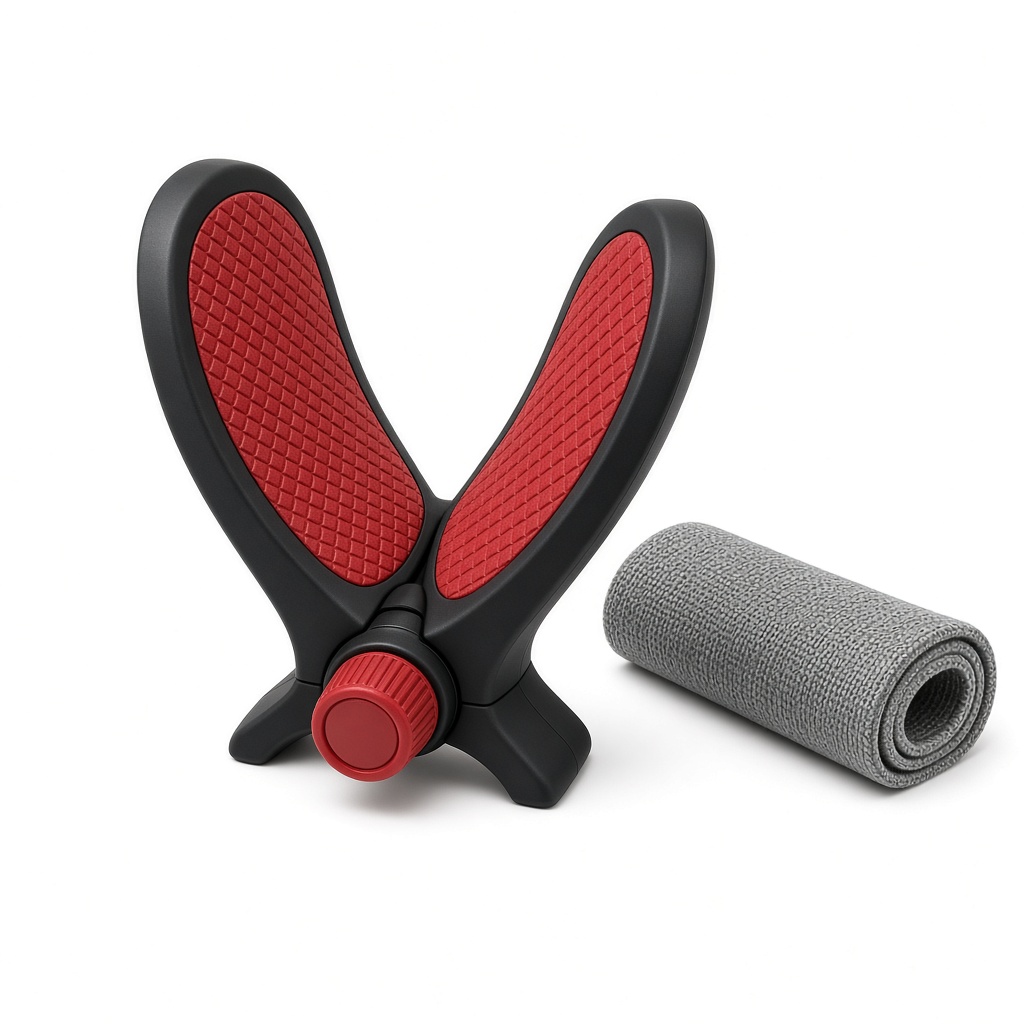
The maker describes a butterfly device with two large curved arms and a dial at the lower end. Resistance is stated as 10 to 35 kg. The inner pad surfaces are layered and textured so the device slips less on skin or clothing. A woven resistance band is included.
- TypeSpring trainer, butterfly shape
- Resistance10–35 kg, adjustable
- PadsTextured, non-slip
- IncludedResistance band
- ShopAmazon.co.uk
Can suit you if
- You want to plan a progression in kilograms
- You prefer textured, grippy pads
- You also want to work with a band
- You train at home without other equipment
A poor choice if
- You are at the very start and want to avoid a higher load
- You want the most compact model
- Extra accessories do not interest you
- You expect a medical device
As an Amazon Associate, AhilHealth earns from qualifying purchases. Price, availability and returns are set by Amazon.co.uk.
Inner thigh trainer, 15–70 lb
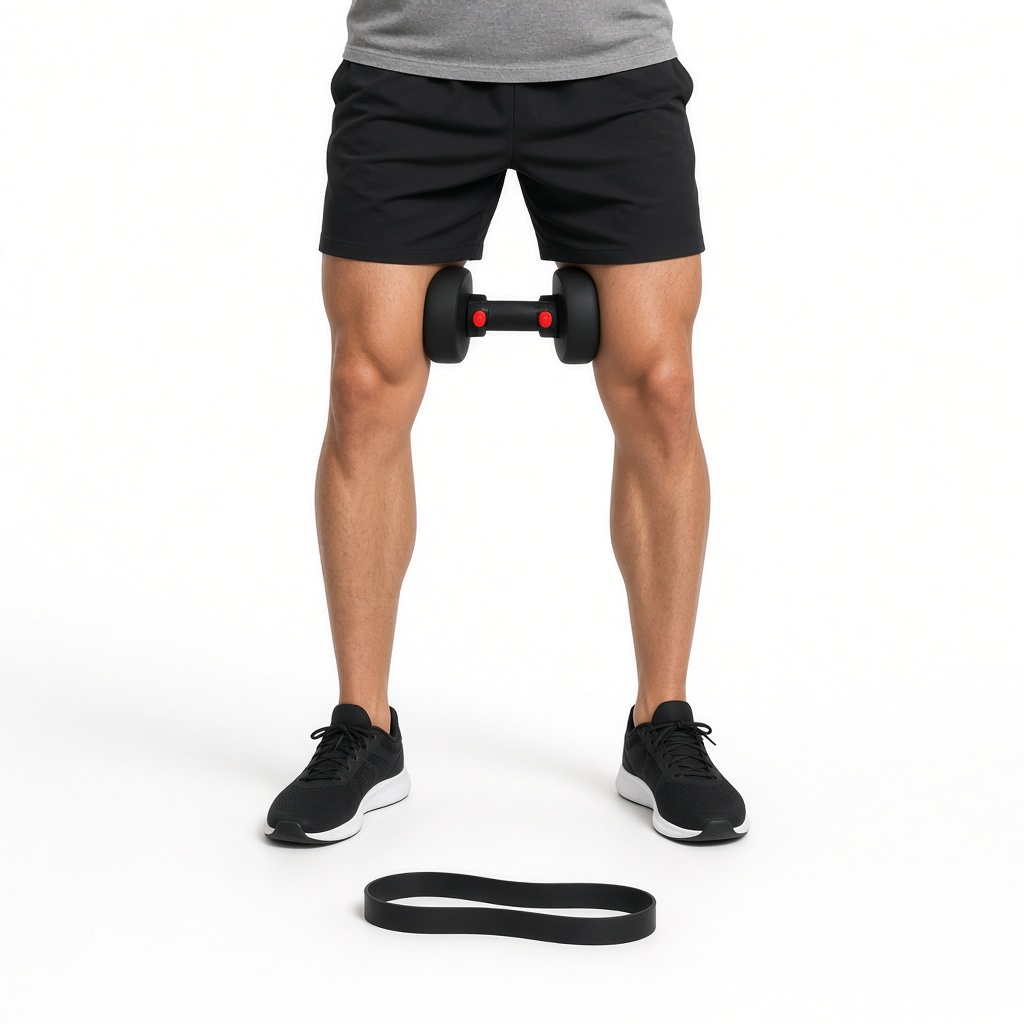
The Amazon.co.uk listing describes a compact inner-thigh trainer with an adjustment knob, coated pads and a fabric resistance band. Resistance is stated as 15 to 70 lb. The movement is adduction: squeezing inward, typically between the thighs.
- TypeAdductor trainer
- AdjustmentKnob
- Resistance15–70 lb
- IncludedFabric band
- ShopAmazon.co.uk
Can suit you if
- You mainly want to work the inner thigh and the pelvic region
- You want a slim device without a large accessory set
- You want to train standing or lying down
- You already have a basic level of strength
A poor choice if
- You want the load written in kilograms
- You expect especially soft, thick pads
- You want a device with many extra modes
- You want to start with no load at all
As an Amazon Associate, AhilHealth earns from qualifying purchases. Price, availability and returns are set by Amazon.co.uk.
Inner thigh and hip trainer, 7–32 kg
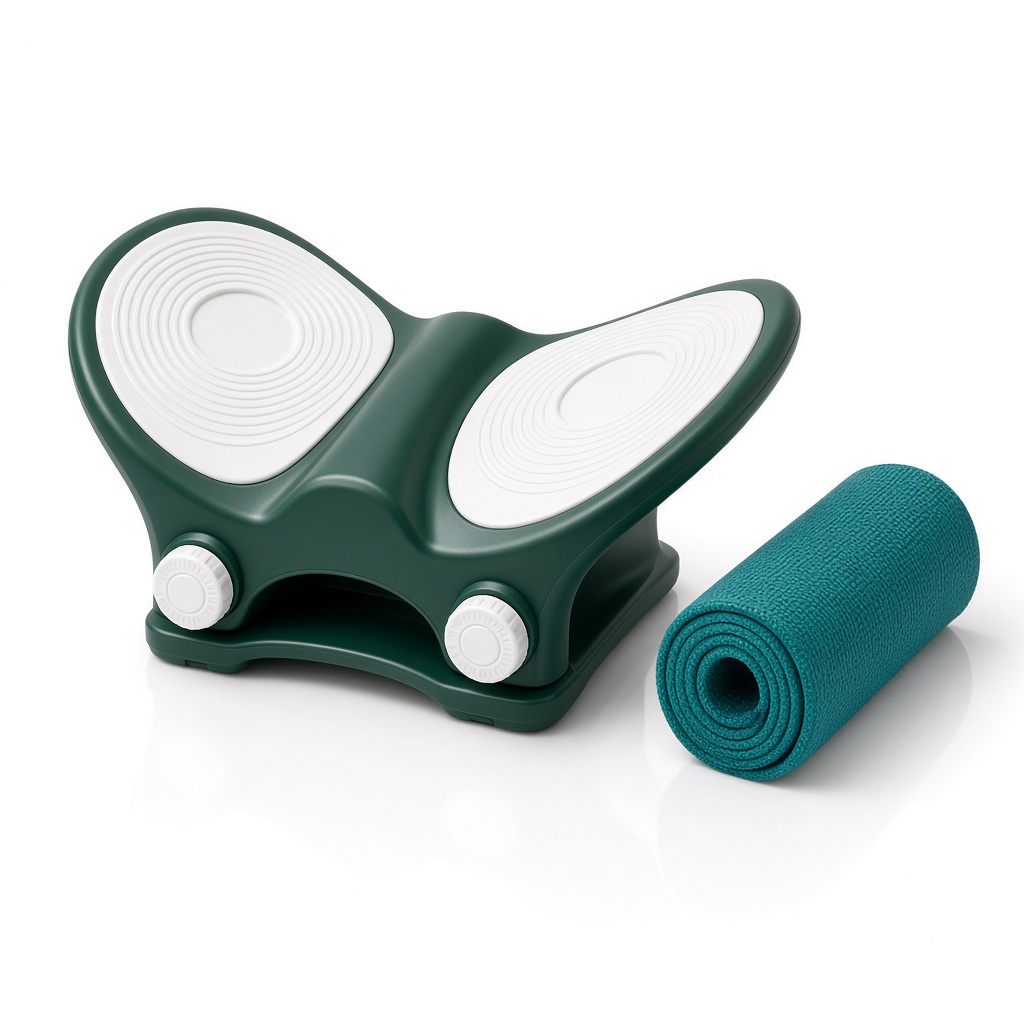
The listing describes a spring trainer with a rotary dial, a soft pad coating and a resistance band. Resistance is stated as 7 to 32 kg. That lower starting point is why it sits here as the gentler of the three.
- TypeSpring trainer with soft pads
- PadsSoft, anti-slip, as stated
- Resistance7–32 kg
- IncludedResistance band
- ShopAmazon.co.uk
Can suit you if
- Soft, wide pads matter more to you than a high load
- You want a gentler start
- You want to use the band for glutes and arms as well
- You prefer a quieter look
A poor choice if
- You want a stated top load above 32 kg
- You are already used to high loads
- You need a particularly compact travel format
- You want to rely on a maker's promise alone
As an Amazon Associate, AhilHealth earns from qualifying purchases. Price, availability and returns are set by Amazon.co.uk.
How to choose between the three
The differences that actually matter are three, and none of them is the colour.
- The stated resistance. All three listings give a number. Model A is 10–35 kg, model B is 15–70 lb, and model C is 7–32 kg. Model C starts lower. Model B is the one written in pounds.
- The pad surface. This is the most common reason devices like this end up in a drawer. If the pad is small or hard, pressure concentrates on a few centimetres of thigh. Soft, wide pads change the experience more than any other feature.
- The accessories. Bands widen what you can do, but only if you actually use them. For a short daily session, a simple device with good control is enough.
Sensible use
- Start at the lowest resistance available, with few repetitions per set.
- Control the movement in both directions: close slowly, and do not let the device spring back.
- Do not hold your breath during the effort. A breath-hold raises abdominal pressure — the opposite of what we want in this region.
- Secure any straps. A slipping device is the most common cause of small injuries.
- Two or three sessions a week are enough. The muscles need rest days as much as they need work.
- Stop if you feel groin pain, tingling, or discomfort that remains after the session, and speak to a clinician.
Common questions
Not directly. They load the adductors, a neighbouring muscle group that works with the pelvic region and the trunk. Specific pelvic floor exercises are different, need no device, and are described on the Exercises page.
No. The basic work needs nothing. A device adds a measurable load and can support the habit. For other people it is in a drawer after two weeks.
With a resistance device, think in sets rather than a daily total: two or three sets of ten controlled repetitions, two or three times a week, is a cautious start. The measure for increasing the load is movement quality, not exhaustion.
These are third-party products with changing stock. The shop page is the only current source for price and availability. Check both before you buy.
No. We have no shop, no stock and we do not process orders. The links go to Amazon.co.uk. The purchase happens entirely there, including delivery, warranty and returns. As an Amazon Associate, AhilHealth earns from qualifying purchases. Price, availability and returns are set by Amazon.co.uk.